Cover quotation
Every person has three stories: the one they tell about themselves, the one others tell about them, and their true story.
The first two can be manufactured, altered and reshaped over time. The third does not change...
If you have sufficient means, you may have your own media; supporters who applaud everything you do, and servants who write praises of you.
You may also buy people of such character that they are willing to slander others and tell lies. You may fill society with hatred, demonise innocent people, and even have them lynched.
Instead of justice, you may steer communities through fear, self-interest and false paradises; you may present yourself as a hero.
But truth... is like the staff of Prophet Moses before Pharaoh and his magicians. One day it emerges and swallows everything that has been manufactured. You cannot change this.
The first two stories remain in this world. The third story embraces you... And meets you in eternal life.
A dream transformed into a university
İpek University was not a collection of buildings. It was my dream, and my greatest prayer, to build a platform that would cast light upon creation for generations and benefit all people—even all living beings.
Power, opportunity and knowledge have value when they are sought for the purpose of benefiting others.
A person is measured not by what they possess, but by the value they add to humanity. This was what I believed when I founded the university. I wanted young people not merely to acquire a profession, but to have something to say to the world, works to create and a responsibility towards others. I imagined them carrying precious stones to a lofty platform where knowledge could meet art, aesthetics could meet morality, labour could meet meaning, and all could contribute value to humanity.
A person’s character is determined by what they place at the centre of their life. At that centre should be neither self-interest nor fear, but truth. This does not mean denying fear or self-interest; it means refusing to allow them to rule us or separate us from the truth.
A person either lives with dignity beside the truth, or turns towards oppression and lives in disgrace.
I did not expect young people never to make mistakes. Making mistakes is part of being human; persisting in them, however, takes a person away from their own truth. Turning back from a wrong is not defeat, but a victory a person has won. We do not lose when we fall; we lose when we give up trying to rise again.
İpek University was established by an Act of the Grand National Assembly of Türkiye in Ankara in 2011. Its establishment, campus, academic infrastructure and all its activities were financed from the resources of the İpek Group. No financing was received from any foreign person or institution, third party or outside organisation; no donations were accepted during its establishment or period of operation.
As the İpek family, we wanted to leave behind an enduring work that looked not only to the time in which it was established, but also to the future. We made no distinction between people and expected nothing from them in return. Our only hope was to earn the pleasure of Allah, who had granted us these means. Therefore, if what we did is not appreciated by some people, we feel no disappointment.
The meaning of education
Knowledge, character and responsibility.
I never regarded education as merely lessons, examinations and diplomas. Having a profession was, of course, important; but it was not enough on its own. What would a person do with what they had learned? Whose life would they touch? What goodness in the world would they help to multiply? That was the real question.
In İpek University’s understanding of education, there was room not only for the student’s mind, but also for their character and imagination. Research, workshops, cinema, design, music and a culture of creating together were not ornaments at the margins of education; they were essential parts of it.
I wanted, in some measure, to close the ever-widening distance between the material and the spiritual. Educating people who were knowledgeable but without compassion, successful but without responsibility, could not be considered the achievement of a university.
A good education was not about telling a person what to think. It was about giving them a mind capable of seeking the truth, a heart capable of recognising beauty and a character that respected the rights of others.
Whether everyone knows it or not, there is no greater joy in life than making another person’s life better.
A person’s character is determined by what they place at the centre of their life. At that centre should be neither self-interest nor fear, but truth. This does not mean denying fear or self-interest; it means refusing to allow them to rule us or separate us from the truth.
The students were the true investment
The true value of a university is revealed not in its buildings, of course, but in the people educated within them. I also believed that precious stones should be placed where their value could be understood. If a jewel were displayed among scrap metal as though it were a piece of iron, its worth might never be recognised.
Financial hardship should not be allowed to become a wall before a talented and hardworking young person. Scholarships, preparatory education, academic guidance and an educational system in which students could reach their teachers were all parts of this belief. Every student should receive enough support to live under the normal conditions enjoyed by other students. Wealth or fame inherited from one’s family could not confer superiority. Superiority should depend only upon good character.
Practices such as favouritism, privilege and arbitrary discrimination, which violate the rights of others, could have no place at the university. Indeed, although I very much wanted it, my own daughter could not study at İpek University, which bore her own surname.
Young people should concern themselves not only with answering the questions of their own time, but also with truths that would illuminate the lives of those who would come after us.
When thought became place
Where an idea took architectural form.
We first drew the campus together with artists. Then, together with architects, engineers, craftspeople and artists, we built that picture.
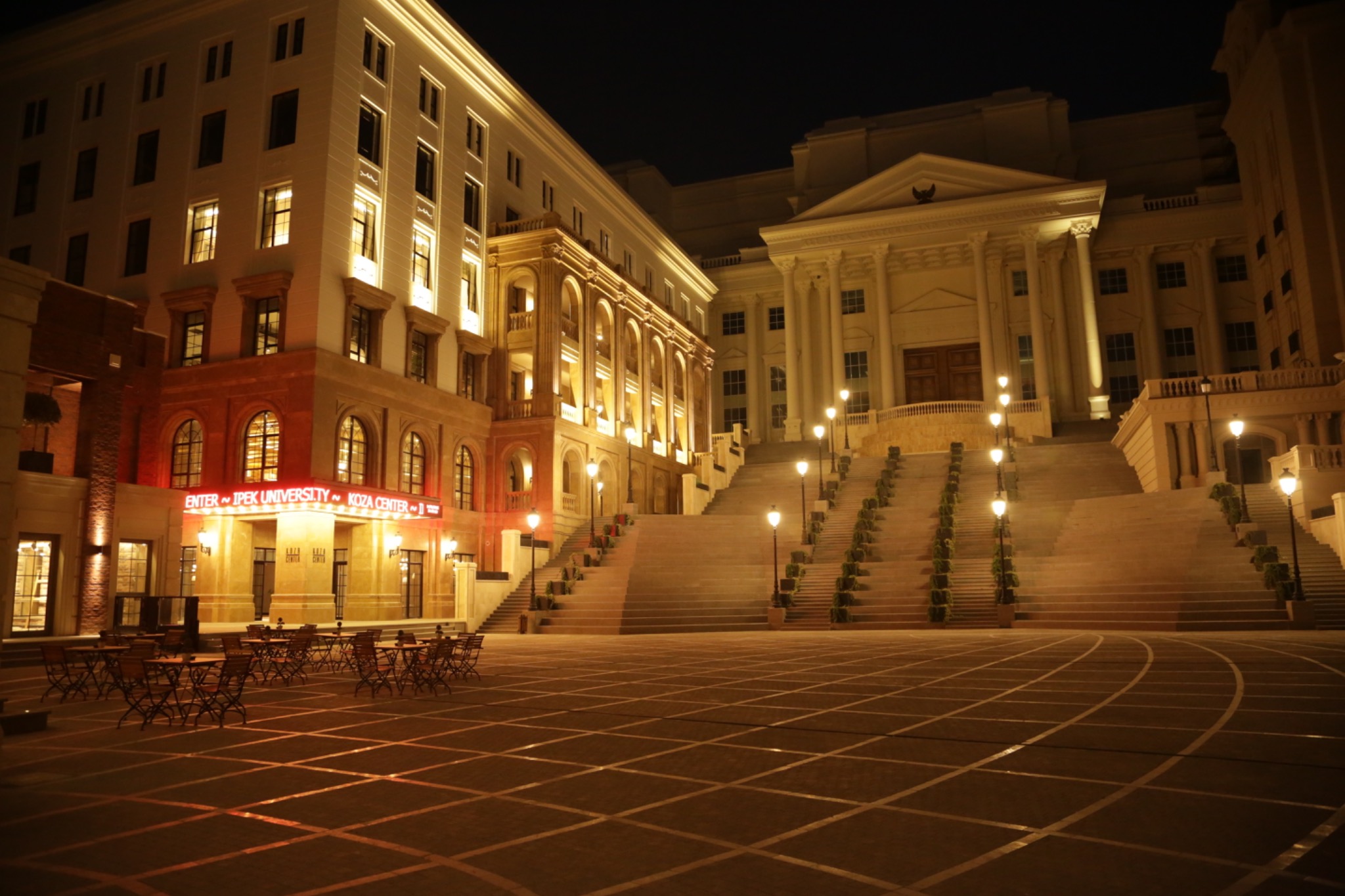
The architecture of a university expresses the value it places upon people, students and education. For that reason, I concerned myself with every detail, from its lamps and bricks to its floors and wall decorations. I installed some of the great chandeliers with my own hands.
At the entrance to every building on the campus was an inscription explaining the architectural tradition in which it had been built. I wanted an art-history lecturer not to have to explain architecture to students solely through a photograph in a book. The lecturer could leave the classroom, stand before the architectural style being described and teach through a living work. In this way, the campus would not merely be a place where education occurred; it would itself become part of the education.
The library, classrooms, studios, stage, student club, café and accommodation were not disconnected spaces. They were parts of the same life. We wanted a campus where students did not simply attend classes and leave, but where they could think, create, form friendships and learn to live together with differences.
Seven film studios built to international standards were available to the students; yet the university itself was already a film set. So that students would not be separated from social life during winter conditions, we also built a heated, enclosed and living city immediately beneath the university.
The architectural splendour would meet the young people who would give it enduring value, and the platform from which the light of truth could shine across the world was now ready.
Art, cinema and culture
Languages that touch the human spirit.
Cinema and art were not ornaments or promotional devices at İpek University. They were a vast platform through which the university could speak to the whole world in every language.
People are not shaped by news alone. The films they watch, the music they hear and the designs they see quietly touch many parts of their lives, from their conversations to their dreams. I therefore believed that art and the media should create work that not only attracts attention, but also adds value to human life.
Instead of easy methods that diminish people for the sake of ratings, it was possible to create works that were watched, that encouraged thought, that taught, and that did not wound good character. I wanted İpek University to educate young people capable of achieving this in cinema, television, animation, visual arts, design, fashion, performing arts and music.
Even a single enduring work can sometimes justify years of effort. But our dream was not confined to a single work. It was to educate people who could create in their own language, culture and country, and who would not lose their identity or moral character while reaching the world.
Neither family ties, nationality, money nor position makes a person valuable. The one quality that gives a person value is moral character.
The essence of all revealed religions is already “good moral character”.
A shared life founded on respect
Bridges, not walls.
A person who does not respect another’s faith, ideas and way of life cannot expect respect for their own. In the shared life of the university, I wanted this belief not merely to be taught, but to be lived.
I had a mosque, a church and a synagogue built side by side so that young people of different faiths who wished to worship could practise their beliefs while respecting one another.
We needed bridges between people, not walls that magnified differences. Before the way in which a student defined themselves, what mattered was the kind of person they were. No one should face discrimination because of their identity, faith or ideas.
At İpek University, freedom of thought and good moral character were shades of the same colour.
Truth gains strength from questions. A university can be a university only to the extent that different ideas and ways of life are not treated as threats, human dignity is protected and the common good can be sought.
A university open to the world
The courage to carry one’s own voice into the world.
I did not want the students of İpek University to stop at the borders of their own country. I wanted them to encounter other cultures, learn from good examples across the world and carry what they created to other countries.
In pursuit of this aim, we entered into an agreement with the University of Southern California School of Cinematic Arts—an institution governed by leading representatives of Hollywood and the cinema industry—and benefited from its experience. We received academic and institutional advisory support from USC, and a USC delegation visited our university. This relationship formed part of our effort to raise our education in art and cinema to an international level.
The university’s international outlook did not mean merely printing the name of an institution in a brochure. It meant learning languages, gaining opportunities for mobility and discussing the same questions with students and academics in other countries.
The aim was not to imitate the world, but to stand upon the level the world had reached, rise higher and do better.
The people in the story of its foundation
No work is ever created through the labour of one person alone. An idea may be born in one person, but it is transformed into reality through the shared labour of those who believe in it and work for it.
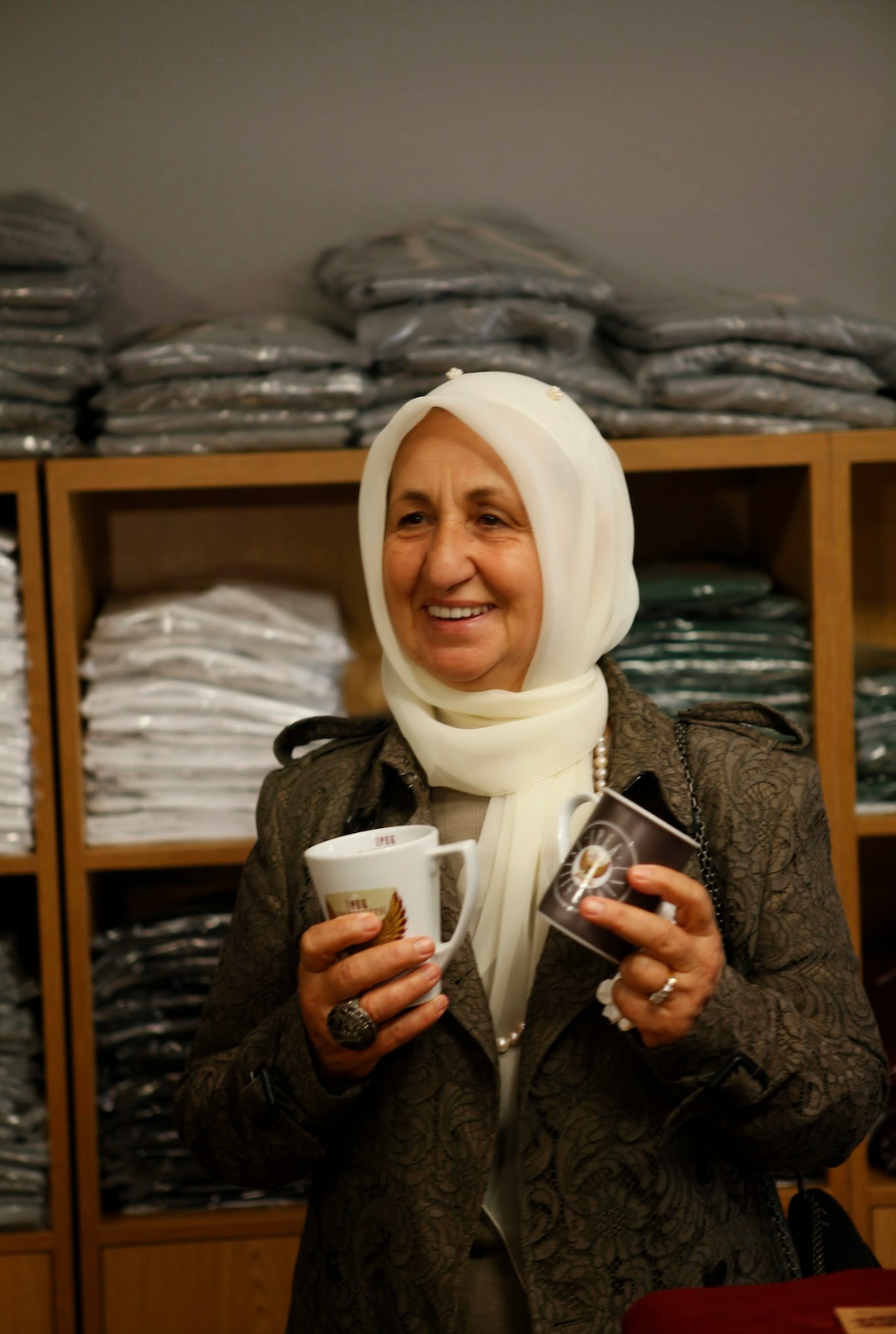
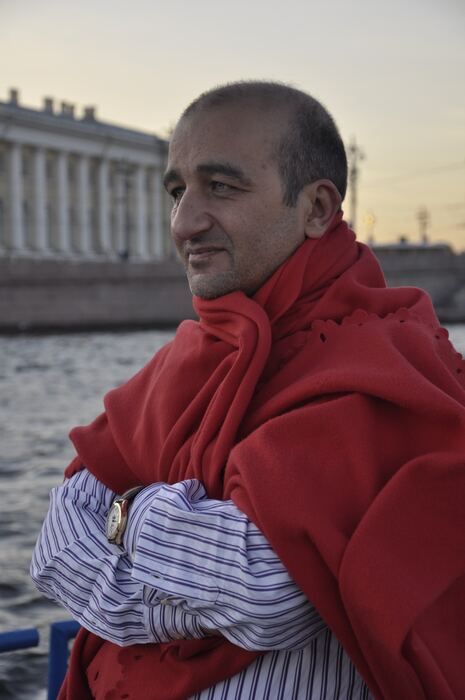
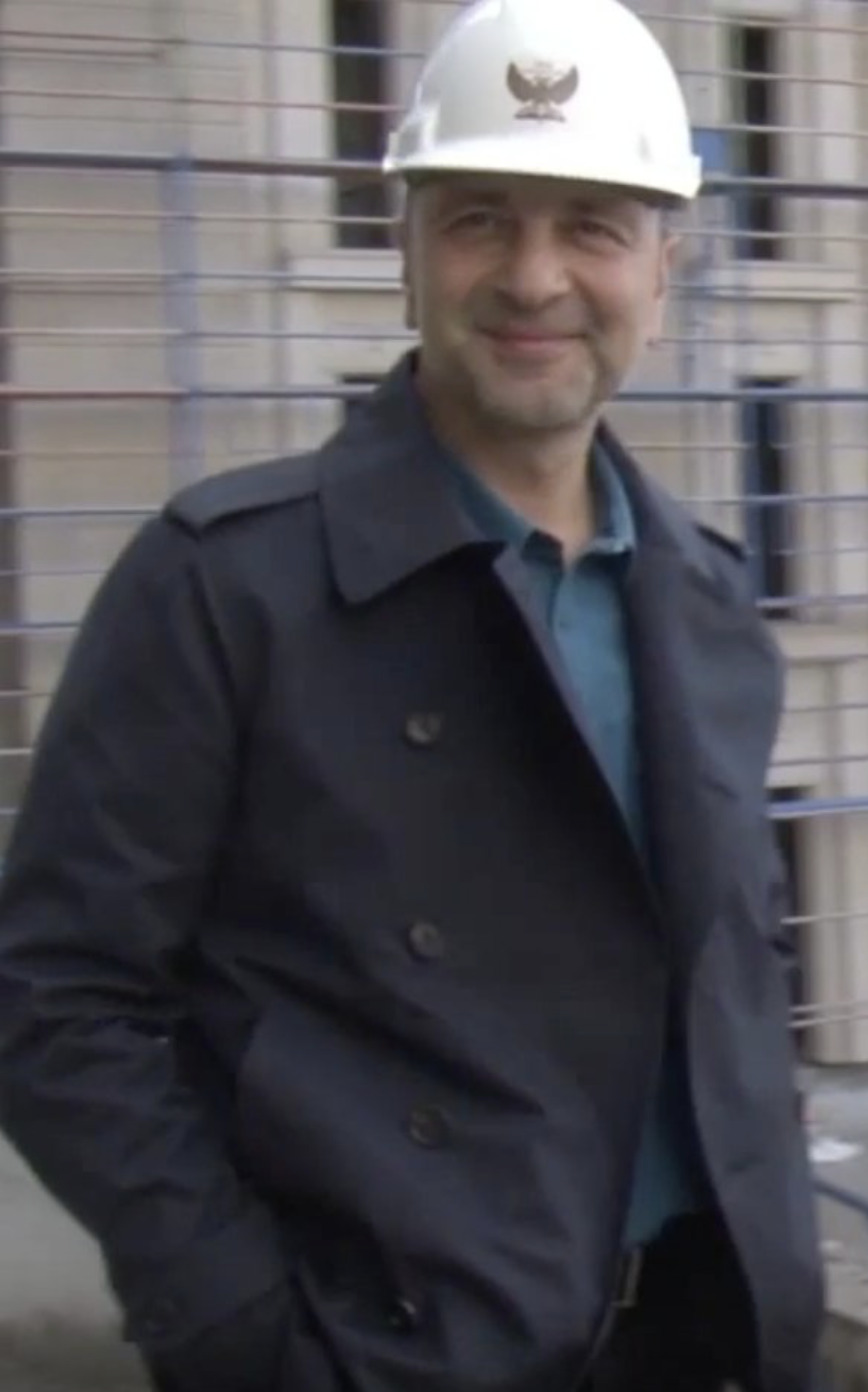
The story of İpek University bears the mark of my family, colleagues, academics, architects, engineers, craftspeople and students. The photographs of my mother, Hacı Melek İpek; my brother, Hacı Cafer Tekin İpek; and me are included in this section not to create a family album, but so that people may know who dreamed this great dream, stood beside the truth so that this prayer might be realised, and paid a very heavy price for doing so.
Every person has a record of their life: What did they do? Where did they earn their resources, and where did they spend them? What was their purpose, and what kind of person were they?
The record of the İpek family includes schools, student accommodation and mosques that it built and donated to the state. It includes providing scholarships to young people and improving their living standards.
It includes trying to reach every person in need without discrimination.
And it includes founding a world university to spread good moral character throughout the world.
This record must be known if the truth is to be understood.
The unchanging story of truth
There are three kinds of people in life: Good people, Bad people, And those who lead the way...
No one knows what life will place before them. You cannot choose where you will be born, what you will experience, or the trials you will face.
But at the end of the road, which side you will stand on; Whether you will be among the good, among the bad, or among those who lead the way... Is your choice.
Photograph and video archive
Not to embellish the past, but to preserve the truth.
An institution may be closed; its sign may be removed, its students dispersed and the purpose of its buildings changed. But it cannot be erased.
Words that have been spoken cannot be erased…
Ideas cannot be erased; neither can a written work or a photograph.
What was lived cannot be treated as though it never happened.
These photographs and videos record not only the outward appearance of a campus, but also the intention formed there, the labour given to it and the life that was lived there. The buildings illuminated at night, classrooms, studios, library, shared spaces and places of art are now documents of memory.
The archive exists not to embellish the past, but to preserve the truth.
We will not invent a history we do not know. We will not accuse a person we do not know. But neither will we abandon what we do know to silence because of fear or self-interest.
Only Allah, Exalted is He, knows how each person’s story will end.
But He has told us where each road leads.
Therefore, by looking at the road travellers have chosen, we know where they will arrive if they do not change their direction…
The closure
An institution was closed. The truth it left behind was not.
In the inspections conducted before and after the university was closed, no academic, administrative or financial failing was established that would have required its closure.
Why İpek University was closed remains a great unanswered question; it awaits its answer in a future in which the rule of law is re-established and truth prevails.
It is difficult to create a work, but easy to burn it. A work brought into being through the labour of thousands of people over many years may be set on fire by a single match in one person’s hand.
But the real question is this:
Can truth burn?
History has shown that truth does not burn.
The direction of life
Life is full of choices.
We often have no control over outcomes, but this is not what is asked of us. What matters is that we choose our direction and do not lose our way.
A person’s family, surroundings, community and chosen leaders may all be valuable; but none of them should be placed above the truth.
Life sometimes places self-interest before us, and sometimes fear. At other times, possibilities darken the heart and exhaust hope.
A person’s worth depends upon whether they allow self-interest, fear and possibilities to govern them, and whether they stand beside the truth.
To oppress, to treat oppression as legitimate, to remain silent before oppression, to walk upon the road of oppression;
or to stand beside the truth…
That is the whole matter.
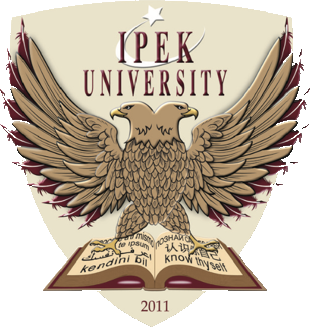
İpek University’s emblem: the double-headed eagle
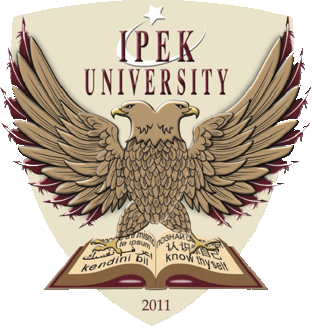
The eagle represents majesty. Its two heads represent its gaze towards the civilisations of East and West and its bringing of both together within one body. Its wings shaped as pen nibs represent sacrifice; the colour red, suffering; and the book from which it rises, the power and value of knowledge. The words “Know thyself”, written in every language upon the book, also represent an important truth of creation.
Why does this archive exist?
They changed İpek University’s emblem and replaced it with a rooster. The rooster is undoubtedly also a worthy creature; but the double-headed eagle, drawing its strength from a book and rising through suffering and sacrifice, tells another story…
İpek University has today been transformed into another institution. But its idea continues to live.
This website is not an advertisement. Its purpose is to document what truly existed and what was achieved, and to tell future generations why and how İpek University was founded.
Truth belongs to no one. When documents, images, testimony and completed works are brought together, the true story reveals itself.
We will not invent what we do not know. We will not conceal what we know. If we are shown to be wrong, we will correct it.
What matters is fidelity to the truth.